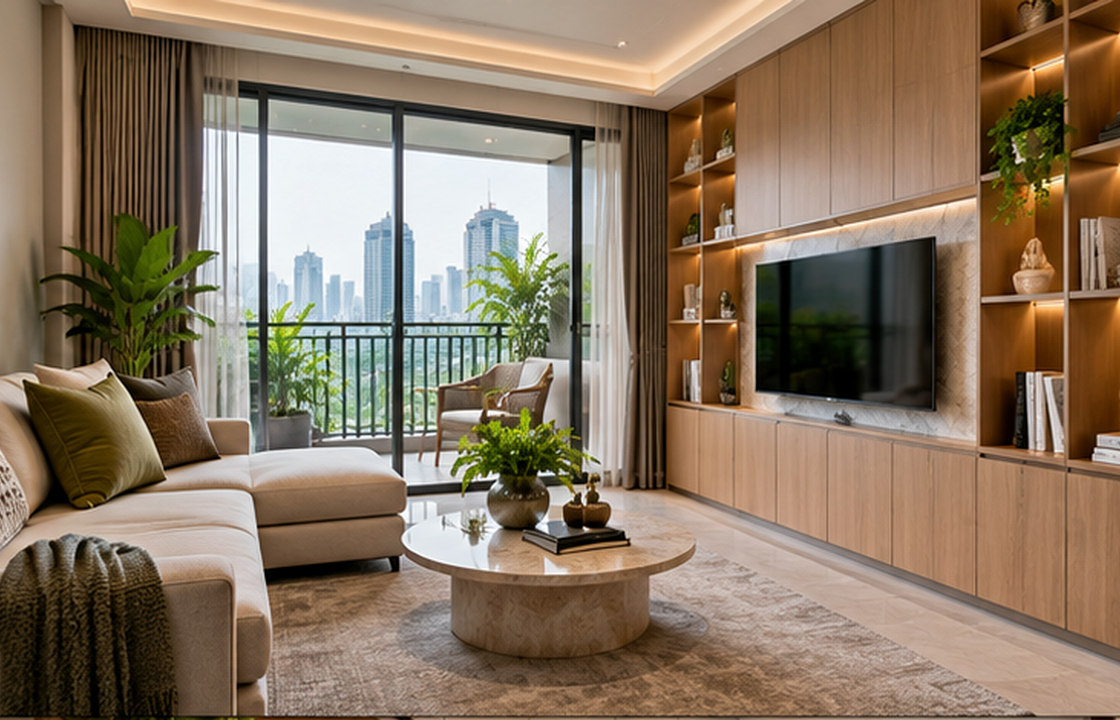
Bedroom comfort near busy Jakarta roads depends on more than a thick curtain. Begin by identifying where sound enters, coordinate the window and door assemblies with specialists, and plan a calm internal layout and controllable lighting that support rest.
Note noise sources at different times; Check windows, doors and mechanical systems; Confirm façade changes with management.
Identify the noise route
Traffic, construction and building equipment create different sounds and travel through different paths. Note whether sound enters around windows, through doors, from mechanical equipment or across shared walls. An acoustic consultant can help diagnose persistent problems. Avoid buying decorative acoustic panels before the actual noise route is understood; those panels may reduce reverberation without meaningfully blocking street noise.
Review the complete window and door assembly
Acoustic performance depends on glazing, seals, frames, installation and openings working together. A small air gap can undermine an otherwise expensive specification. Verify that window changes are permitted by the building management and that ventilation needs remain satisfied. Choose curtains for light control and softening reflections, but do not treat them as a substitute for a properly specified enclosure.
Arrange furniture for restful use
Where practical, position the bed away from the noisiest façade and reduce direct sightlines to busy circulation. Plan storage, bedside lighting and charging points so occupants can settle without extra movement. Use upholstered elements where appropriate to soften internal reverberation. A bedroom should feel restorative in both daylight and after dark, not just quiet during a site visit.
Test the result, not only the product
Agree a reasonable acceptance method before installation. Measure or listen at comparable times, especially during traffic peaks and when mechanical systems run. Ensure access for servicing seals and air-conditioning equipment. Record any remaining source of noise so expectations stay realistic; complete silence is rarely a sensible promise in a dense city.
Compare the noise at similar times
If street noise is the concern, visit and listen at the times when it is most disturbing, not only during a quiet midday appointment. Record the existing window type, seals, air-conditioning operation and whether there is an alternative path for ventilation. Consider a modest diagnostic test with an acoustic specialist before ordering expensive glazing. Agree which improvements are realistic within the building rules. After installation, compare like-for-like conditions, and keep a record of seals or components that need inspection during routine maintenance.
A Jakarta design scenario
In an apartment facing a busy South Jakarta junction, careful sealing and a well-coordinated window system may matter more than a padded headboard. Repositioning the bed and controlling morning light can complete the comfort strategy.
Balance the design priorities
Noise reduction, fresh air and building approvals must be considered together. Sealing a room without a ventilation plan can create a different comfort problem.
Common pitfalls to avoid: Buying acoustic foam to block traffic noise; Ignoring leaky frames and door gaps; Sealing a room without a ventilation strategy.
Practical review checklist
- Note noise sources at different times
- Check windows, doors and mechanical systems
- Confirm façade changes with management
- Plan bed placement and light control
- Set a realistic post-work test
Turn this checklist into a coordinated review with the owner, operator, designers and relevant technical specialists. Confirm which items belong to the appointed scope before drawings, procurement or construction are authorised.
Frequently asked questions
Do heavy curtains soundproof a bedroom?
They can reduce some reflections and soften the room, but they rarely stop significant traffic noise entering through windows or gaps.
Should I replace my apartment windows?
Only after checking the source of noise, the building rules, ventilation requirements and suitable technical specifications.
Can furniture improve sleep comfort?
Furniture placement, soft surfaces and controllable light can improve comfort, although they do not replace enclosure-level acoustic work.
Moving from idea to a clear brief
A useful next step is to collect photographs of the existing site, a measured plan where available, an outline of users and operations, target timing and the decisions that remain open. A design consultation can then focus on scope, priorities and technical interfaces before materials and furniture are ordered. Local permissions and specialist requirements should be checked with appropriately qualified advisers.
Explore SATU.JAKARTA’s expertise, browse the portfolio records, or begin a project conversation.