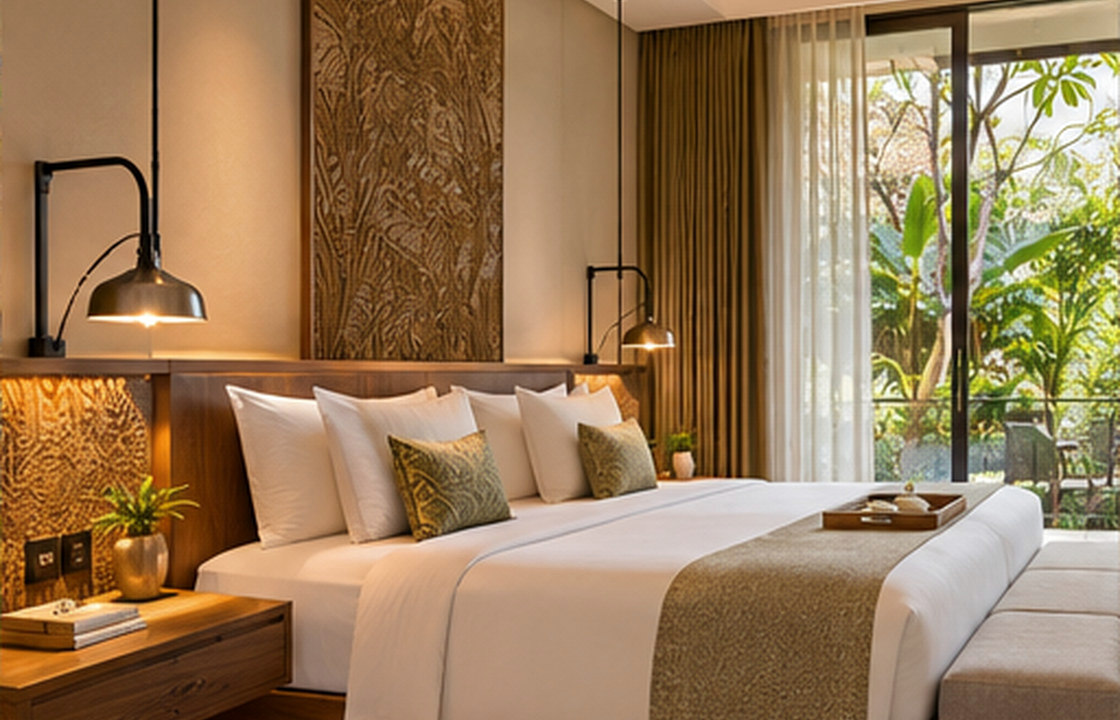
A durable hotel guestroom in Jakarta is designed for both guests and the staff who maintain it. The best specifications combine comfort, clear controls, robust furniture, accessible services and materials that can be cleaned and repaired efficiently between stays.
Test two guests moving with luggage; Review housekeeping access and reset time; Choose repairable fittings and consistent spares.
Walk the room as a guest
A guest needs intuitive entry lighting, a clear luggage position, comfortable access to the bed, usable sockets and a sensible route to the bathroom. Check whether two people can move around the room without repeatedly shifting bags. A premium image cannot compensate for a poorly positioned switch or a curtain that cannot be reached from the bed.
Then walk it as housekeeping
Staff must move through the same room quickly and safely every day. Review access around and beneath beds, replacement of linen, cleaning of decorative elements and the location of housekeeping supplies. Avoid intricate surfaces that trap dust where they are frequently handled. Materials should be assessed with the actual cleaning practices and replacement strategy used by the operator.
Design furniture for repair and replacement
Bedside tables, chair upholstery, drawer runners, lamps and curtains receive repeated use. Specify accessible components and consistent spare parts where possible. If a damaged finish requires replacing an entire wall of custom joinery, the apparent luxury may become an operational burden. Keep detailed product references and installation information in the handover package.
Control light and sound
Hotel guests have different sleep schedules and sensitivity to noise. Plan window coverings, bedside controls, practical reading lamps and a comfortable route to the bathroom at night. Address external noise and mechanical equipment as part of the room assembly. Test a furnished sample room with housekeeping and operations staff before repeating the design across many rooms.
Mock up a room with real operating staff
A hotel guestroom should be tested with housekeeping and engineering personnel before dozens of identical rooms are completed. Ask housekeeping to change the bed, clean behind furniture and reach the bathroom surfaces. Have engineering staff locate access points and identify common spare parts. Then invite someone unfamiliar with the room to find the light switches, charging points and luggage area. Record changes before final sign-off. This process can reveal small operational problems that a beautifully staged model room would otherwise conceal.
A Jakarta design scenario
For a business hotel in Central Jakarta, discreet luggage storage, clear bedside controls and replaceable upholstery may create more lasting value than fragile decorative surfaces placed at every touch point.
Balance the design priorities
Guestroom design balances first impressions with repeat operation. An elegant, maintainable room often protects brand quality better than an elaborate interior that ages quickly.
Common pitfalls to avoid: Concealing service points behind decorative panels; Using delicate finishes at repeated contact points; Copying an untested room across the whole hotel.
Practical review checklist
- Test two guests moving with luggage
- Review housekeeping access and reset time
- Choose repairable fittings and consistent spares
- Test bedside light and blackout controls
- Approve a furnished sample room
Turn this checklist into a coordinated review with the owner, operator, designers and relevant technical specialists. Confirm which items belong to the appointed scope before drawings, procurement or construction are authorised.
Frequently asked questions
What makes a hotel room easy to maintain?
Accessible surfaces, durable finishes, serviceable fittings and documented spare parts reduce the burden of daily cleaning and repair.
Should guestroom furniture be custom made?
Custom pieces can use space well, but they need robust specifications, replacement options and easy access for maintenance.
Why is a mock-up room important?
It allows guests’ comfort, housekeeping routines and technical details to be tested before the design is repeated across the property.
Moving from idea to a clear brief
A useful next step is to collect photographs of the existing site, a measured plan where available, an outline of users and operations, target timing and the decisions that remain open. A design consultation can then focus on scope, priorities and technical interfaces before materials and furniture are ordered. Local permissions and specialist requirements should be checked with appropriately qualified advisers.
Explore SATU.JAKARTA’s expertise, browse the portfolio records, or begin a project conversation.