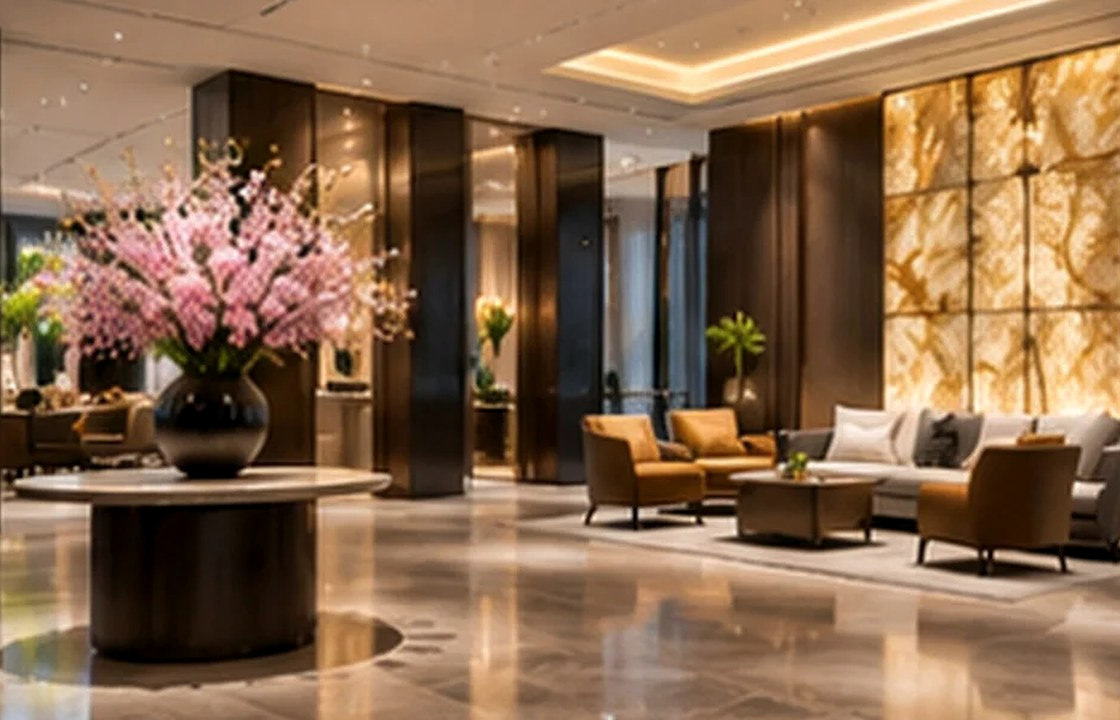
Hotel arrival is a sequence of decisions: where to approach, unload, check in, wait and continue to a room. A successful Jakarta hotel lobby uses clear wayfinding, visible assistance and comfortable lighting to make this sequence natural for guests and practical for staff.
Trace guest routes from drop-off; Test visible assistance and queue space; Provide luggage-friendly waiting positions.
Plan arrival before the lobby photograph
Study vehicle drop-off, pedestrian routes, luggage handling and weather protection. A guest arriving after a long journey should identify the entrance and reception without searching. Test the route from the actual exterior approach, not just from a rendering inside the lobby. Coordinate accessible movement and any security requirements with the operator and relevant professionals.
Make assistance visible
The reception point may be a traditional counter, a series of smaller desks or a more informal welcome arrangement. Whatever the format, guests need to know where to ask for help. Keep staff storage, document handling and equipment integrated without slowing check-in. Consider peak group arrivals and where waiting lines will form if multiple guests arrive together.
Create comfortable waiting and orientation
Seating should allow guests to wait with luggage, talk quietly or confirm their next journey. Avoid placing these groups directly in a main circulation pinch point. Lighting and views can make waiting feel restorative, but clear routes to elevators, restrooms and dining are equally important. Signage should support the architecture rather than compensate for confusing planning.
Consider operation at every hour
The arrival experience changes between bright daytime, evening and overnight periods. Test lighting, security visibility and the way staff cover the lobby with different team sizes. Choose materials that tolerate bags and trolley movement. Ensure decorative objects do not block supervision or make cleaning difficult. A lobby succeeds when it operates calmly during both quiet and busy moments.
Walk the lobby with luggage after dark
A realistic arrival review should follow the guest from the vehicle or public approach to the front desk, lifts and room route. Use bags or a trolley to check turning space, slopes and potential congestion. Repeat the experience at night, when glazed doors and decorative lighting can change visibility. Ask staff to operate the space during a simulated group check-in. Record the path of deliveries and housekeeping separately, and keep signs legible without excessive visual noise. The best arrival design is intuitive even to first-time visitors.
A Jakarta design scenario
A Jakarta hotel near a major business district may receive conference groups and late-night arrivals. A clear route from vehicle drop-off to check-in and onward circulation can be more valuable than an oversized reception sculpture.
Balance the design priorities
The lobby should feel distinctive but never confusing. Use one memorable design gesture, then protect the practical arrival sequence and staff sightlines.
Common pitfalls to avoid: Prioritising a sculptural desk over clear check-in; Placing waiting seats in main routes; Ignoring luggage and service movements.
Practical review checklist
- Trace guest routes from drop-off
- Test visible assistance and queue space
- Provide luggage-friendly waiting positions
- Check night lighting and security sightlines
- Review staff operation during peak arrivals
Turn this checklist into a coordinated review with the owner, operator, designers and relevant technical specialists. Confirm which items belong to the appointed scope before drawings, procurement or construction are authorised.
Frequently asked questions
What is the most important hotel lobby design factor?
A legible arrival sequence with visible assistance, comfortable waiting and clear routes to rooms and amenities.
Should a small hotel have a large reception desk?
Not necessarily. Reception scale should reflect expected arrivals and staffing, provided guests can easily identify help.
How does lighting affect hotel arrival?
Lighting supports orientation, comfort and safety, particularly when guests arrive after dark or move between outdoor and indoor areas.
Moving from idea to a clear brief
A useful next step is to collect photographs of the existing site, a measured plan where available, an outline of users and operations, target timing and the decisions that remain open. A design consultation can then focus on scope, priorities and technical interfaces before materials and furniture are ordered. Local permissions and specialist requirements should be checked with appropriately qualified advisers.
Explore SATU.JAKARTA’s expertise, browse the portfolio records, or begin a project conversation.