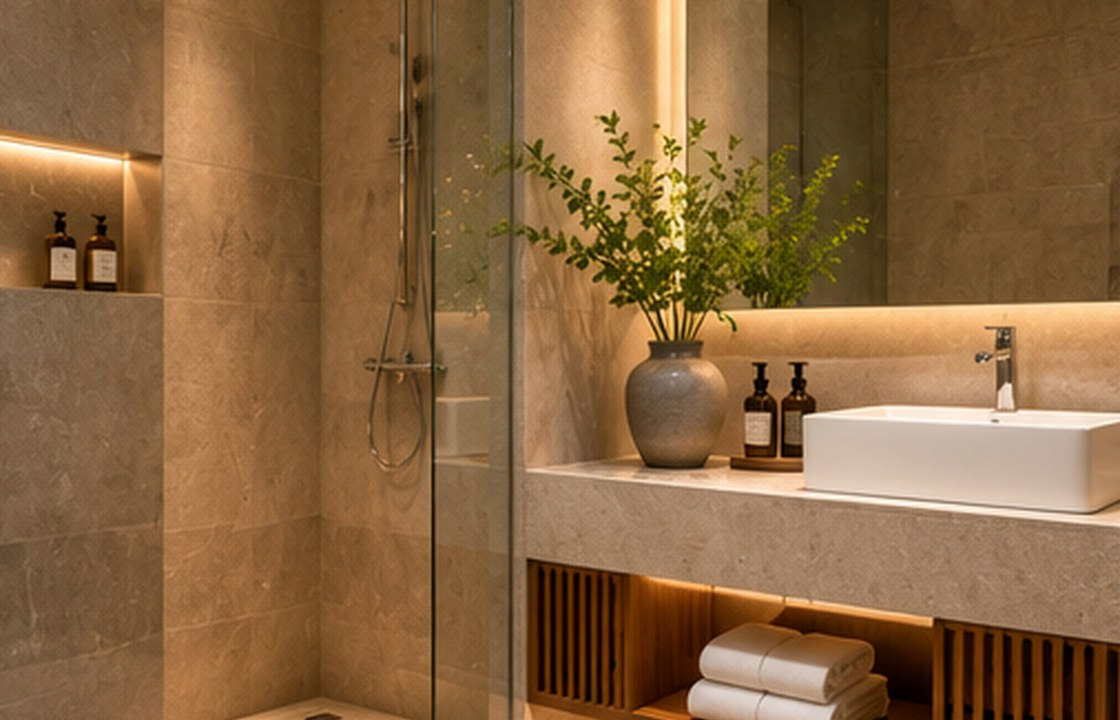
Bathroom durability begins with water management and ventilation, not decorative tile. Jakarta bathrooms should have clear wet and dry zones, appropriate drainage, maintainable fittings and well-coordinated waterproofing details reviewed by qualified installers.
Confirm wet/dry zone boundaries; Review waterproofing with specialists; Check extraction and service access.
Draw where the water actually travels
Shower spray reaches beyond the nominal shower footprint. Mark splash paths, door swings, towel positions, floor transitions and the route to the vanity. Consider people entering with wet feet and cleaning the space with a bucket or hose. Make sure level changes are safe and the floor plan can be used comfortably without water spreading into the bedroom.
Coordinate a complete waterproofing strategy
Tiles and grout are not a substitute for a properly designed waterproofing system. Confirm compatible membranes, corner treatments, penetrations and inspection requirements with appropriate specialists. Check the substrate before finishes are approved. The design team should maintain clear drawings and inspection records so problems can be investigated without guessing what is behind the finished wall.
Give moisture a reliable exit
Bathrooms without natural cross-ventilation depend on an effective extraction strategy. Review the exhaust path, replacement air, switch controls and service access. Locate mirrors, lighting and storage so towels can dry and surfaces can be cleaned easily. A beautiful enclosed shower can become unpleasant if steam and residue remain trapped after every use.
Choose surfaces for maintenance
Review slip resistance, grout lines, stone care and the suitability of metal fittings for repeated wet use. Select storage that keeps bottles away from the floor and drains. Check whether replacement parts are obtainable locally and make access to traps and valves straightforward. Inspect sample surfaces under bathroom lighting, not only in a materials showroom.
Inspect the wet-area details before tiling
Use a drawing set that clearly identifies waterproofing extents, penetrations, drain positions, threshold conditions and ventilation access. Review it with the responsible specialists before finishes cover the work. Decide where inspection photos or test records will be stored and who signs them off. Once the tiles are laid, a visual inspection cannot establish whether membranes and transitions were completed properly. Keep a simple maintenance plan for sealants and drains as part of the owner handover, so small issues are recognised before they create major damage.
A Jakarta design scenario
A high-rise apartment bathroom in Kuningan may lack an operable window. The plan should therefore coordinate mechanical extraction, drainage and accessible plumbing before finalising the mirror, glass partition and decorative niche.
Balance the design priorities
The apparent trade-off between a seamless spa look and serviceability is often unnecessary. Thoughtful access panels and well-detailed transitions can protect both the appearance and the building fabric.
Common pitfalls to avoid: Assuming decorative tile is waterproofing; Concealing drains that need regular cleaning; Forgetting how the exhaust system is serviced.
Practical review checklist
- Confirm wet/dry zone boundaries
- Review waterproofing with specialists
- Check extraction and service access
- Test finish grip and cleaning method
- Record valves, drains and inspection points
Turn this checklist into a coordinated review with the owner, operator, designers and relevant technical specialists. Confirm which items belong to the appointed scope before drawings, procurement or construction are authorised.
Frequently asked questions
Do waterproof tiles eliminate leak risk?
No. The waterproofing assembly beneath and around the finish is critical. Use competent installers and appropriate inspections.
How can a windowless bathroom feel fresher?
Coordinate effective extraction, replacement air, cleanable surfaces and a lighting scheme that supports daily use.
Should floor drains be hidden for appearance?
They may be discreet, but must remain accessible, sized correctly and compatible with the required floor falls.
Moving from idea to a clear brief
A useful next step is to collect photographs of the existing site, a measured plan where available, an outline of users and operations, target timing and the decisions that remain open. A design consultation can then focus on scope, priorities and technical interfaces before materials and furniture are ordered. Local permissions and specialist requirements should be checked with appropriately qualified advisers.
Explore SATU.JAKARTA’s expertise, browse the portfolio records, or begin a project conversation.